
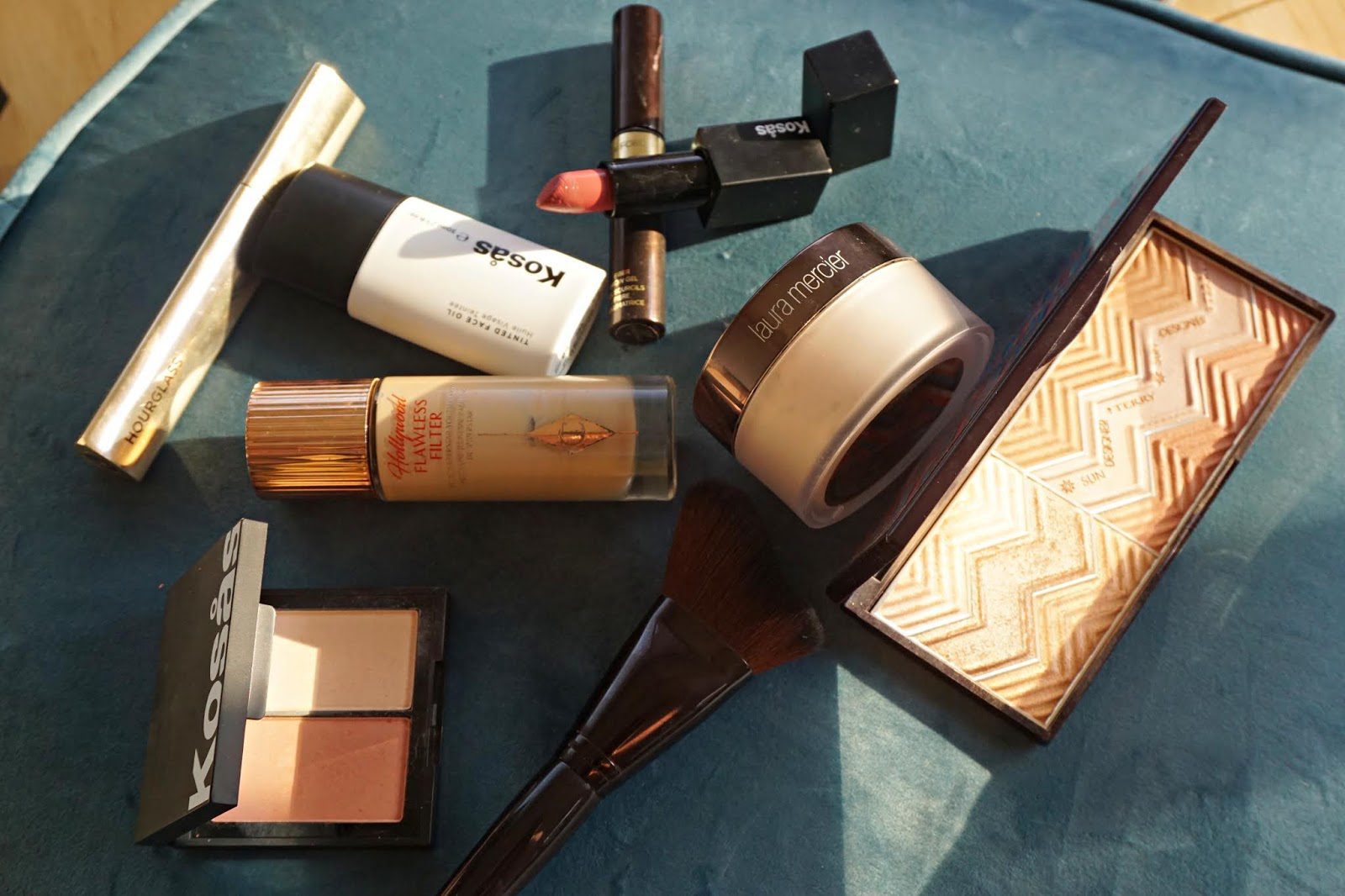
It’s mid-August. Your SPF is half-empty, your setting powder looks cakey in the humidity, and your hair is somewhere between a second-day blowout and a full revolt. Every late summer, a handful of new launches hit shelves timed almost perfectly to this moment of routine frustration. This year, four products are generating real conversation: the Hair Ritual Volume Spray, Kosas Tinted Face Oil, Sisley-Paris Phyto Lumiere, and Laura Mercier Setting Powder in Glow. Here’s what they actually are — and who should actually buy them.
Why Late Summer Beauty Launches Are Actually Worth Watching
Most people treat January and spring as the big reset seasons for beauty. Brands push that narrative hard. But late summer — roughly mid-August through early September — is when skin and hair are under the most cumulative stress of the year, and when well-timed launches respond to genuinely real conditions rather than manufactured need.
By August, most people have absorbed several months of peak UV exposure, chlorine, salt water, and daily heat. Skin sits in a paradox: shiny on the surface, dehydrated underneath. Whatever foundation shade was bought in winter is probably oxidizing too warm by now. Hair is oxidized and porous from months of environmental exposure. Products that address lightweight coverage, glow correction, and structural hair repair in late summer aren’t trend-driven — they’re answering an actual seasonal problem.
What Sun Exposure Does to Skin by August
Cumulative UV exposure thickens the outer layer of the epidermis as a protective response, which makes skin texture look rougher and products sit differently than they did in spring. Moisturizers that felt silky in April may pill or drag in August on the same skin. SPF-heavy summers tend to leave pores congested around the nose and chin from occlusive sunscreen buildup. And the lipid depletion that accumulates from months of heat, air conditioning, and barrier stress creates a surface that reads oily but is genuinely dehydrated underneath.
Products designed for these specific conditions aren’t novelty launches. They exist because this is one of the harder periods of the year for the skin barrier.
Why Brands Time New Releases Around Late Summer
Beauty brands track purchasing behavior closely by season. Late summer intersects with back-to-school and back-to-office cultural moments — both strong triggers for routine re-evaluation. Brands launch in this window because attention is high and purchase intent is active. That doesn’t guarantee any particular launch is worth buying, but it does mean the product development cycle was usually pointed at a real seasonal condition, not pure novelty.
Hair Ritual Volume Spray: What Fine Hair Actually Gets
Volume sprays have a credibility problem. Most work for about forty minutes, leave a crunchy residue, and make fine hair look puffed rather than full. The Hair Ritual Volume Spray takes a different approach: root-focused application on damp hair rather than an all-over dry-hair mist. That single distinction changes what the product can actually deliver.
All-over volume sprays coat mid-lengths and ends, adding weight to exactly the sections that least need it. Root-focused application on damp hair allows volumizing polymers to dry into the strand structure during the blow-dry rather than sitting on top of the cuticle. The lift comes from inside the fiber, not from product buildup on the surface. In practice, this holds through humidity instead of collapsing under it.
Application Method: The Step Most People Get Wrong
The near-universal mistake with volume sprays is applying them to dry, finished hair. On dry hair, the formula coats the cuticle without structural penetration — you get temporary grip at best and visible product buildup at worst. The Hair Ritual spray is designed for damp, not wet, hair. Section the hair, hold the nozzle about four inches from the scalp, spray at the roots in short bursts, then lift and blow-dry each section while it’s still damp enough to set shape.
That extra three minutes of technique gives a result that holds through the day. Skipping it makes this an expensive light-hold spray with a decent scent.
Fine Hair vs. Thick Hair: Realistic Expectations
Fine, low-density hair benefits most. If you have thick hair with natural body, the difference between using this spray and not will be hard to notice. For straight, fine hair that collapses within the first hour of styling — the kind that looks flat in photos and has zero memory — a correctly applied root volume spray genuinely changes how the day goes.
The direct competitor in the same category is the Living Proof Full Dry Volume Blast ($35), which works on dry hair and is far more convenient for daily use. The Hair Ritual spray requires the damp-application step, making it less grab-and-go, but the volume it builds is more structural and holds longer. The Oribe Dry Texturizing Spray ($52) is a different product category entirely — it adds texture and separation, not root lift. Know which problem you’re trying to solve before choosing between them.
Scent and Residue: The Practical Concerns
Many volume sprays spray an invisible white residue visible on dark hair or smell aggressively synthetic. Hair Ritual’s formula has a clean, minimally fragrant scent — present but not perfume-forward — and leaves no visible white cast on dark strands under standard lighting. For a formula that holds, that’s a real advantage over most drugstore competitors at lower price points.
Kosas Tinted Face Oil vs. the Sheer Coverage Market
Kosas built its reputation on skin-first formulas, and the Kosas Tinted Face Oil stays firmly in that lane. It isn’t a foundation. It isn’t a tinted moisturizer with meaningful coverage. It’s a face oil with enough pigment to even skin tone, blur visible pores, and add luminosity — not enough to cover active breakouts or significant hyperpigmentation. On oily skin, the oil base amplifies shine by midday in a way that reads greasy rather than glowy. This is not a universally flattering product.
| Product | Price | Coverage | Finish | SPF | Best For |
|---|---|---|---|---|---|
| Kosas Tinted Face Oil | ~$42 | Sheer | Luminous, dewy | None | Dry-to-combination skin wanting glow |
| Charlotte Tilbury Hollywood Flawless Filter | $49 | Sheer | Lit-from-within | None | Photos, layering under foundation |
| NARS Tinted Glow Booster | $42 | Sheer | Radiant | None | Mixing into moisturizer or existing foundation |
| Milk Makeup Sunshine Skin | $38 | Light-medium | Natural | SPF 30 | Minimal coverage with built-in sun protection |
| Tower 28 Sunscreen + Serum Tint | $30 | Sheer-light | Skin-like | SPF 30 | Sensitive or reactive skin, clean ingredients |
For dry to combination skin, the Kosas formula is one of the better options at this price. Its texture doesn’t pill under setting powder — a real issue with oil-first formulas layered under matte powder. The main practical limitation is the missing SPF. If a streamlined morning routine is the goal, the Milk Makeup Sunshine Skin or Tower 28 Serum Tint both offer built-in sun protection at lower price points, though with a less luminous finish.
Sisley-Paris Phyto Lumiere: The Short Answer
For most people, Sisley-Paris Phyto Lumiere at $180+ is not the right purchase. The illuminating formula is genuinely exceptional and the skin-feel is in a different class from mass-market alternatives — but the Charlotte Tilbury Hollywood Flawless Filter at $49 delivers roughly 80% of the same visible glow result for less than a third of the price. Buy the Phyto Lumiere if you’re already invested in the Sisley-Paris skincare system and treat this as part of your skin treatment budget. If glow is the only goal, there are better uses for $180.
Laura Mercier Setting Powder in Glow: Three Questions That Matter
The original Laura Mercier Translucent Loose Setting Powder ($40) has been a top-tier recommendation for over a decade — one of the rare products that actually delivers on the invisible-finish promise. The Glow shade adds light-reflecting mica particles to that same base formula. Smart for a specific skin type. The wrong call for others.
Does the Glow Shade Work on Oily Skin?
No. This is the most important thing to know before buying. The original Translucent shade absorbs surface oil and creates a flat matte set that extends makeup wear. The Glow shade uses mica particles to scatter light — which on oily skin means amplifying shine on any surface oil present. By midday, oily skin with the Glow shade reads unintentionally shiny rather than radiant. Not a subtle difference.
If oil control is your priority, the original Translucent is still the correct product. The Glow shade is not a version that works for everyone — it was built specifically for skin that needs luminosity, not matte control.
How Is It Different from the Original Translucent Shade?
The base is identical: the finely milled talc and rice powder blend that made the original famous for its skin-blurring, invisible finish. The only addition is light-diffusing mica particles that scatter light across the surface rather than absorbing it, producing soft-focus radiance instead of a flat set. Both versions set makeup and reduce transfer effectively. Neither causes flashback in photography — the mica particle size is fine enough to avoid that issue, which was the main concern ahead of launch.
Who Is the Glow Shade Actually Built For?
Dry skin. Mature skin that photographs flat or dull. Anyone who finds traditional setting powders make their complexion look chalky or one-dimensional by the end of the day. On these skin types, the Glow shade solves something real — it locks in coverage without the deadening effect matte powders create on skin that already lacks natural luminosity.
Application technique matters with this formula. Use a large, fluffy brush with light pressure in sweeping motions from the center of the face outward. Pressing hard or baking with a dense puff creates visible buildup that looks powdery by afternoon. Light hand is everything.
The Right Order for Layering These Four Products
Application sequence changes results. None of these products are standalone — they sit within an existing routine, and the order matters more than most product descriptions acknowledge.
- Sunscreen first, always. The Kosas Tinted Face Oil contains no SPF. Apply a standalone sunscreen and wait a minimum of five minutes before layering anything over it. Applying face oil directly over unset SPF disrupts the protective film and reduces photoprotection efficacy.
- Kosas Tinted Face Oil second. Warm two to three drops between the palms and press — don’t stroke — into skin. Pressing deposits color more evenly and avoids streaking across the face. Wait about 90 seconds before moving on.
- Sisley-Paris Phyto Lumiere third, if using. Tap a small amount onto the tops of cheekbones, nose bridge, and inner eye corners. This is a targeted illuminator, not an all-over product. Less does more.
- Laura Mercier Setting Powder in Glow last. Tap excess from the brush before application. Sweep from the center of the face outward — the under-eye area, nose bridge, and center forehead need more setting than the hairline and jaw do.
- Hair Ritual Volume Spray on damp hair, before starting your face routine. Doing hair first prevents spray mist from settling onto finished skin, and removes any time pressure from rushing the blow-dry over set makeup.
Total time added to a baseline routine: approximately eight to ten minutes.
How to Evaluate Any New Launch Before Spending Money
Most beauty launches are solutions to problems you’ve been convinced you have. The better your instinct for separating a real gap in your routine from a marketed one, the fewer purchases end up unused on a shelf. Before buying any new product — this season or any other — run through these questions first:
- Does your current routine already have something that does this? If yes, is the new version meaningfully different in a way that matters for your specific skin or hair type?
- Is the hero ingredient listed in the top half of the ingredient list? Ingredients appearing in the bottom third are present at concentrations too low to perform. They’re marketing copy, not active treatment.
- Does the format match how you actually use products in real life? A damp-application volume spray is useless for someone who exclusively air-dries. A face oil adds shine problems for oily skin in late summer heat.
- Are you buying the coverage or intensity level your skin actually needs — not the level the campaign imagery suggests?
- Have you seen reviews from people with your actual skin type, or only content shot under professional lighting by creators with access to professional retouching?
The Return Policy Test
If you’re genuinely uncertain about a product, only buy it from a retailer with a meaningful return window. Sephora accepts returns on opened products within 60 days. That window is long enough to test something across multiple skin days, weather conditions, and lighting situations — which is the only reliable way to know if a product actually works for you.
Wait Two Weeks After Launch
The first wave of reviews — including seemingly organic ones — often comes from seeded product distributed to creators weeks before public launch. Real user feedback patterns emerge on forums, Reddit, and independent review platforms in weeks two and three post-launch. That later window is substantially more useful for a buying decision than anything published on launch day, when the entire information ecosystem has been shaped by brand-controlled access.