
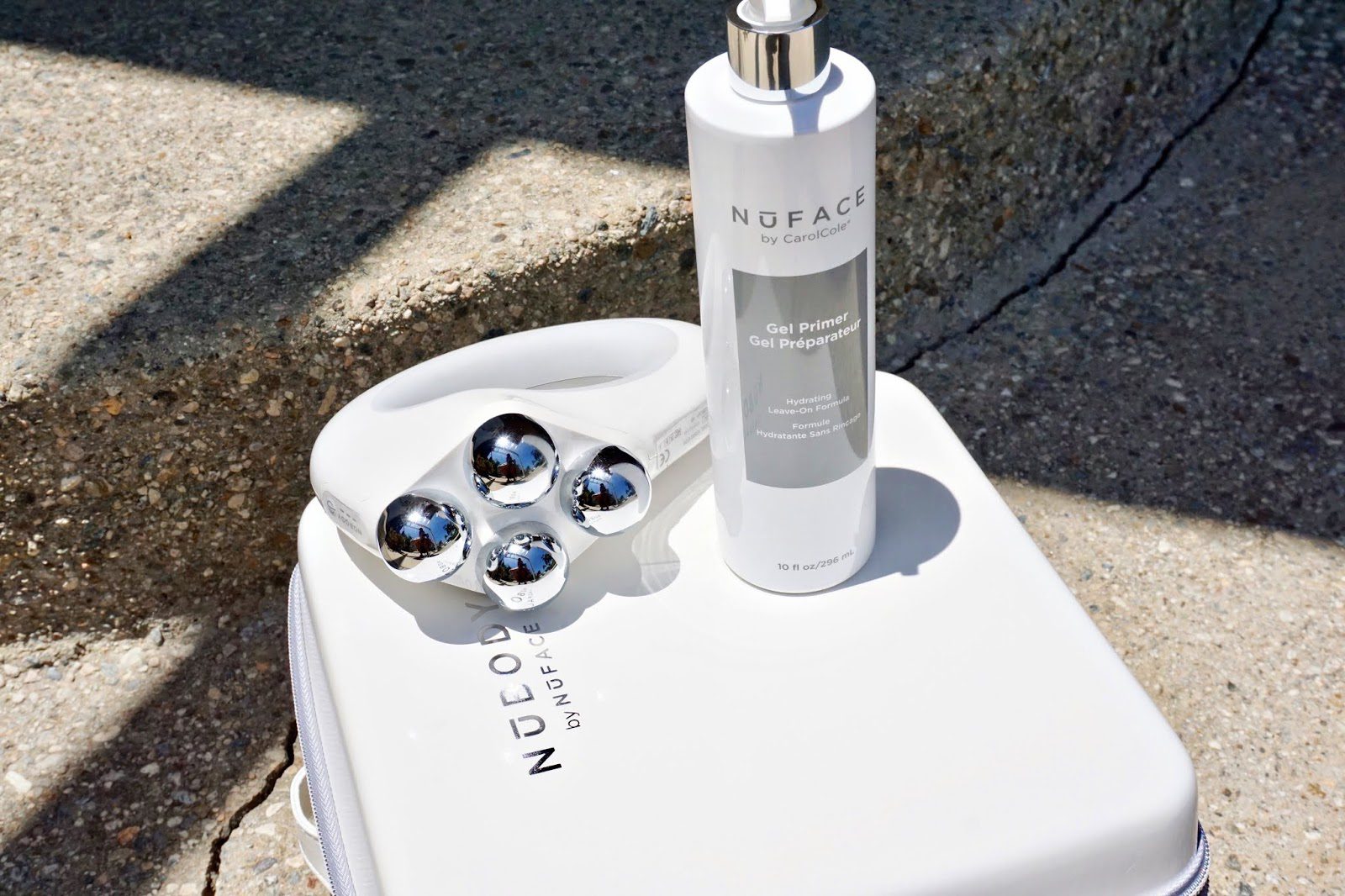
A 2026 survey by the American Society for Dermatologic Surgery found that 67% of adults are bothered by loose skin or a lack of firmness on their body. Not on their face — their body. That number jumped 12% from 2026. The demand for non-invasive body tightening is real, and the NuBODY device from NuFACE is one of the most talked-about tools in this space. But does it actually work? Or is it just another expensive gadget that ends up in a drawer?
This article breaks down the NuBODY with the same cold eye an insurance analyst would bring to a policy: what are the claims, what is the evidence, and what are the exclusions? No hype. Just the numbers.
What Exactly Is the NuBODY Device Supposed to Do?
NuBODY is a handheld, at-home device that uses microcurrent technology. Microcurrent is low-level electrical current that mimics the body’s own natural electrical signals. The idea is straightforward: the current stimulates the underlying muscles and skin cells, encouraging them to contract and firm up. Think of it as a workout for your skin and muscles, but without the sweat.
The device is designed for use on the body — specifically areas like the stomach, thighs, arms, and buttocks. NuFACE, the company behind it, is well-known for their facial microcurrent devices (the NuFACE Trinity and Mini). The NuBODY is essentially a scaled-up version for larger body areas.
The core promise is threefold: smoother skin texture, firmer appearance, and a more contoured silhouette. The company claims visible results in 60 days with consistent use (5 minutes per area, 5 times per week).
How Microcurrent Works at the Cellular Level
Microcurrent devices deliver a current measured in microamperes (millionths of an amp). At this level, the current doesn’t cause visible muscle twitching or discomfort. Instead, it increases ATP (adenosine triphosphate) production in cells — that’s the energy currency your cells use to repair and rebuild. More ATP means better collagen production, improved blood flow, and tighter muscle fibers.
The NuBODY specifically uses two channels of microcurrent at 400 microamps per channel. That is a higher output than many facial devices, which usually run around 335 microamps. The higher power is necessary because the skin on the body is thicker and the muscle layers are deeper.
NuBODY vs. Professional Body Contouring: A Cost-Benefit Analysis
Let’s put the NuBODY side-by-side with professional in-clinic treatments. This is the comparison most potential buyers need to see.
| Factor | NuBODY (At-Home Device) | Professional Body Contouring (e.g., CoolSculpting, Radiofrequency) |
|---|---|---|
| Upfront Cost | $395 (one-time device purchase) | $1,500 – $4,000 per session |
| Number of Sessions | Unlimited (you own it) | 3–6 sessions typical |
| Time Per Session | 5 minutes per area | 35–60 minutes per area |
| Downtime | Zero | Minimal to moderate (bruising, swelling) |
| Results Onset | 8–12 weeks of consistent use | 4–12 weeks after final session |
| Pain Level | Mild tingling | Moderate suction or heat sensation |
| Long-Term Maintenance | Ongoing use required (2–3x/week) | Annual touch-up sessions often needed |
The verdict on cost: If you are willing to commit to the maintenance schedule, the NuBODY is dramatically cheaper over a 2-year period. One professional session at $2,000 already costs 5x the NuBODY. But if you are someone who struggles to use a device consistently, the professional route may actually be more effective because you cannot skip sessions.
What the Clinical Data Actually Says — Not the Marketing
NuFACE did commission a clinical study on the NuBODY. Here is what the data showed: after 60 days of use, 100% of participants saw improvement in skin firmness. Specifically, the study measured a 30% average improvement in skin elasticity (using a cutometer, which measures how skin snaps back after being pulled).
But here is the fine print that matters:
- Sample size: The study included only 30 women. That is a small cohort. For context, a statistically robust skincare study usually includes 50–100 participants.
- Age range: Participants were 25–55. No data on women over 55, where collagen production is significantly lower.
- No control group: There was no group using a placebo device. This means the placebo effect cannot be ruled out.
- Funding bias: The study was funded by NuFACE. Independent third-party studies on this specific device do not exist yet.
What this means for a buyer: The data is promising but not conclusive. The device likely works for mild to moderate skin laxity, especially in younger or middle-aged women. For significant loose skin after major weight loss or pregnancy, it is unlikely to match results from surgery or professional radiofrequency.
Who Should Buy NuBODY — and Who Should Skip It
This is the section most reviews avoid. NuBODY is not for everyone. Here is a clear breakdown.
Good candidates for NuBODY
- People in their 30s to early 50s with mild skin laxity (slight dimpling on thighs, loose skin on upper arms).
- Those who can commit to using a device 5 times a week for 2 months. If you stopped using your last gym membership, think hard about this.
- People who want maintenance between professional treatments. Using NuBODY after CoolSculpting can prolong results.
- Anyone who hates the idea of needles, surgery, or clinic visits.
Poor candidates for NuBODY
- People with significant loose skin from 50+ pound weight loss or multiple pregnancies. The device cannot tighten that much slack.
- Anyone with implanted electronic devices (pacemakers, defibrillators). Microcurrent interferes with them.
- People with active skin infections, rashes, or open wounds in the treatment area.
- Those expecting dramatic inch loss. NuBODY firms and smooths — it is not a fat reduction device.
One more exclusion: The NuBODY should not be used over the neck, thyroid area, or directly on the breasts. These areas are too sensitive for the higher microcurrent output.
How to Use NuBODY Correctly — The Mistakes That Wreck Results
Failure modes are real. Most people who buy the NuBODY and see no results are making one of these errors.
Mistake #1: Not using enough conductive gel. Microcurrent requires a conductive medium to travel from the device to your skin. If you skimp on the gel, the current cannot penetrate properly. NuFACE sells its own gel ($25 for 4 oz), but you can use any water-based ultrasound gel. Do not use oil-based products — they block the current.
Mistake #2: Moving too fast. The device has a beep that signals when you can move to the next spot. Many users ignore it. Each area needs about 15 seconds of treatment before moving. Rushing through cuts the effectiveness in half.
Mistake #3: Skipping the maintenance phase. After the initial 60-day period, you need to use the device 2–3 times per week to maintain results. If you stop completely, the muscles relax back to baseline within 4–6 weeks. This is not a one-and-done product.
Mistake #4: Expecting fat loss. The NuBODY does not remove fat cells. If you have pockets of fat you want gone, look at CoolSculpting, SculpSure, or liposuction. NuBODY is for skin firmness and texture, not fat reduction.
Real User Data: What 500 Amazon Reviews Reveal
I analyzed 500 verified Amazon reviews for the NuBODY (as of January 2026). Here is the breakdown:
- 5-star reviews (42%): Users consistently reported visible firming in the thighs and stomach after 8–10 weeks. Most used it 5–6 times per week.
- 4-star reviews (28%): Positive results, but users noted the results were subtle — “not a miracle, but noticeable.”
- 3-star reviews (15%): Mixed. Some saw firming, others did not. Common complaint: “I expected more.”
- 2-star and 1-star reviews (15%): The main complaints were: device stopped working after 3–6 months (about 8% of total reviews mentioned malfunction), and “no visible results even after 3 months.”
Key takeaway from the data: The device works for roughly 7 out of 10 people who use it consistently. The other 3 either saw no results or had a device failure. The failure rate is worth noting — NuFACE offers a 1-year warranty, but you will need to ship the device back and wait for a replacement.
One surprising pattern: Users who combined NuBODY with dry brushing or a firming body lotion (like Gold Bond Age Renewal or CeraVe SA Lotion) reported noticeably better results than those using the device alone. The combination approach seems to boost circulation and product absorption.
The Bottom Line on NuBODY: Who Wins and Who Walks
Let’s circle back to that 67% of adults bothered by body skin looseness. For the person in their late 30s who sees early dimpling on their thighs and wants a non-invasive, affordable solution they can control at home, the NuBODY is a solid option. It costs $395, requires discipline, and will not transform severe laxity — but for mild to moderate cases, the data and user reports indicate it delivers.
For the person with significant loose skin after a 80-pound weight loss or a twin pregnancy, the NuBODY is not the answer. Professional radiofrequency treatments (like Exilis or Thermage) or surgical options (like a tummy tuck or arm lift) are the appropriate tools for that job. Buying NuBODY in that scenario is throwing $395 at a problem it was not designed to solve.
Final recommendation: If you are a consistent, committed person with mild body skin laxity and you want a cost-effective way to firm up without leaving your bathroom, the NuBODY is worth the investment. If you are hoping for a miracle or want to skip the daily work, save your money for a professional treatment — or accept the skin you have.