
Picture this: it’s 6am, you’ve got 30 minutes before the house wakes up, and your gym bag is collecting dust by the front door. You open three different workout apps, none of them match what you want, and you end up doing 20 squats and calling it done.
That’s not training. That’s procrastination with movement.
After years of testing home routines — including some genuinely bad ones I invented myself — here’s what actually works: a structured list you can follow without equipment, without a gym membership, and without turning every morning into a 90-minute production.
The Weekly Schedule Most People Actually Stick To
Before you pick individual exercises, you need a weekly framework. Most people fail at home workouts not because the exercises are wrong, but because they have no plan for the week. They train legs Monday, hit legs again Thursday because it felt good, skip pulling movements entirely, and wonder why nothing changes after eight weeks.
Here’s a 6-day split that hits every major muscle group twice per week and leaves one full rest day. Shift the days around your schedule — the pattern matters more than the specific day it falls on.
| Day | Focus | Main Exercises | Duration |
|---|---|---|---|
| Monday | Push (Chest, Shoulders, Triceps) | Push-ups, Pike Push-ups, Tricep Dips | 30 min |
| Tuesday | Lower Body + Glutes | Squats, Bulgarian Split Squats, Glute Bridges | 35 min |
| Wednesday | Pull + Core | Inverted Rows, Dead Bugs, Plank Variations | 30 min |
| Thursday | Full Body HIIT | Burpees, Mountain Climbers, Jump Squats | 25 min |
| Friday | Push + Core | Decline Push-ups, Shoulder Taps, Hollow Body Hold | 30 min |
| Saturday | Lower Body + Cardio | Reverse Lunges, Step-ups, Lateral Bounds | 35 min |
| Sunday | Rest or Active Recovery | Walking, Mobility Work, Light Stretching | 20–30 min |
If six training days feels like too much right now, drop Thursday and run a 5-day version. What you should not cut is the rest day — more on that shortly. The rest day is the part that actually makes the other six days work.
The 5 Movement Patterns Every Home Routine Needs
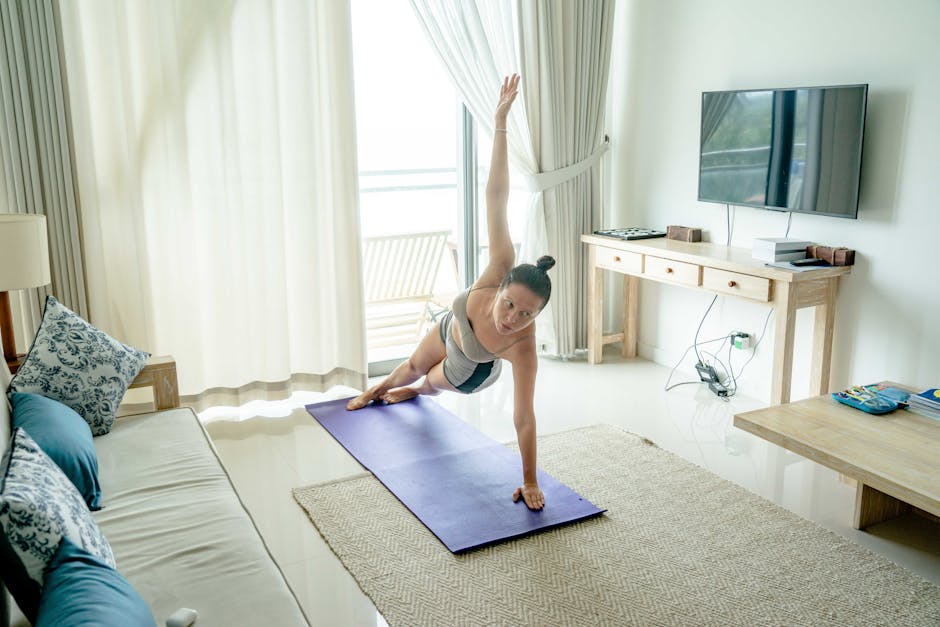
Most home workout lists throw exercises at you without explaining why those exercises matter. Here’s the structure underneath every effective strength program, lifting 300 lbs at a gym or working entirely with your own bodyweight on a living room floor.
- Push — Any movement where you press force away from your body. Push-ups, pike push-ups, wall handstands. Targets chest, front deltoids, and triceps. The easiest pattern to train at home.
- Pull — The hardest movement to train without equipment and the one most people skip entirely. Inverted rows under a table, resistance band work, doorframe pull-up bars. Targets lats, rhomboids, rear deltoids, and biceps. Neglect this long enough and you’ll develop the classic hunched, internally rotated shoulder posture that no amount of stretching will fix.
- Hinge — Loading the posterior chain through a hip-dominant movement. Bodyweight Romanian deadlifts, single-leg deadlifts, good mornings. This is not the same as squatting. In a hinge, the hips drive backward while the spine stays long. In a squat, the knees drive forward and down.
- Squat — Knee-dominant lower body work. Bodyweight squats, goblet squats with a loaded backpack, Bulgarian split squats. The Bulgarian split squat is the hardest bodyweight leg exercise most people have never properly attempted.
- Carry or Core Stabilization — Farmer carries with grocery bags, suitcase carries, or plank-based anti-rotation exercises. Dead bugs and pallof press variations belong here. This is the movement pattern that keeps everything else from breaking down over time.
If your weekly routine hits all five of these patterns — ideally twice per week — you’re training more completely than most people who have full gym access and no plan.
Practical note: spend 5 minutes on movement prep before every session instead of static stretching. Leg swings, arm circles, hip rotations, and 10 slow controlled bodyweight squats will do more for your performance than holding a hamstring stretch ever will. Save static stretching for the end.
Why Home Workouts Stop Working After Week 3
The body adapts faster than most people expect. What challenged you in week one is your warm-up by week four — and if you’re still doing the same push-ups at the same tempo with the same rest periods, you’ve been maintaining fitness, not building it.
This is the single biggest reason home workout routines fall apart. The fix is progressive overload: more reps, slower controlled tempo, shorter rest, or a harder variation. That’s the whole mechanism. There is no other one. Every program that works long-term is just a structured way of applying that principle over months.
Most people never make their workouts harder because harder is uncomfortable. That discomfort is the stimulus. Without it, you’re just moving.
Upper Body Routines Without Any Equipment
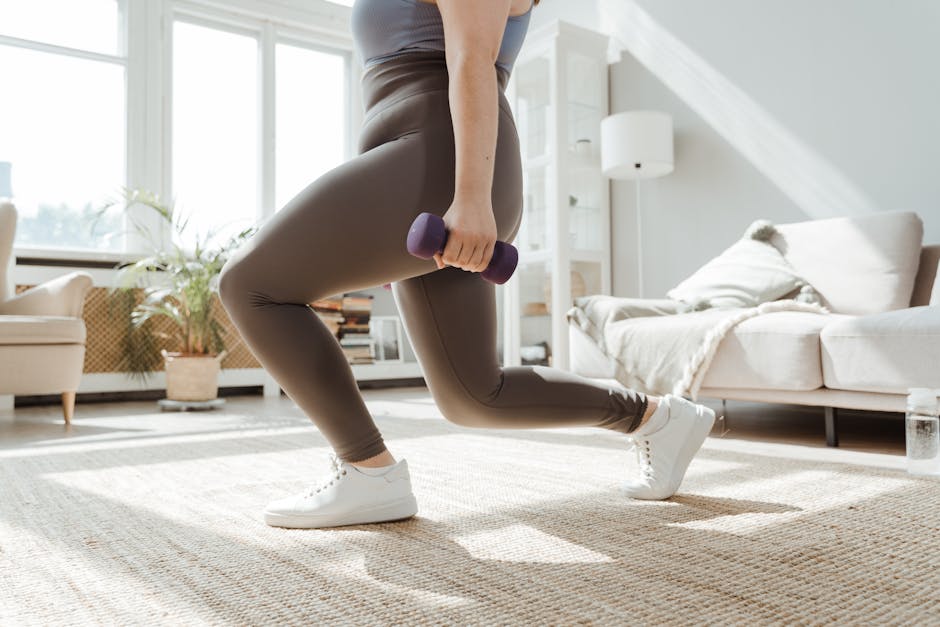
Upper body is where home training actually gets interesting. The push side is straightforward — push-ups have enough progressions to keep you challenged for a full year. The pull side requires creativity but is completely solvable without buying anything expensive.
Push Progressions: Beginner to Advanced
Most people plateau at standard push-ups and stop there. That’s a mistake. Push-ups have at least eight meaningful progressions you can work through over months of consistent training:
- Wall push-ups (starting point for complete beginners or anyone returning from injury)
- Incline push-ups with hands on a countertop or the seat of a chair
- Standard push-ups with a 2-second pause at the bottom position
- Close-grip push-ups (heavier tricep emphasis, less chest)
- Archer push-ups (one arm bears significantly more load — halfway to a one-arm push-up)
- Decline push-ups with feet elevated on a chair or couch
- Pike push-ups (mimics an overhead press, targets shoulders more than chest)
- Pseudo planche push-ups (hardest — requires substantial wrist strength and anterior shoulder conditioning built over months)
If you can do 20 clean standard push-ups with a controlled 2-second descent, you’re ready for archer or decline variations. Don’t stay at level three for six months. That’s how you end up doing the same workout indefinitely while wondering why your upper body looks exactly the same.
Training Pull Movements Without a Gym
Three real options, in order of cost:
First: inverted rows under a sturdy table. Lie on your back underneath a dining table, grip the edge overhead, keep your body in a straight line, and pull your chest up to the surface. This is a legitimate horizontal rowing exercise, not a workaround. Elevating your feet on a chair increases the difficulty considerably.
Second: a resistance band set. Fit Simplify and Whatafit both sell loop band sets for $20–30. With bands you can do pull-aparts, face pulls, band pull-downs, and seated rows. Not identical to a pull-up bar, but the same muscle groups are being trained through a similar range of motion.
Third: a doorframe pull-up bar. The Iron Gym Total Upper Body Workout Bar runs about $30 and fits most standard doorframes with no drilling or wall damage. It opens up pull-ups, chin-ups, neutral grip variations, and hanging core work. If you’re doing serious home training, this is the one purchase that changes what’s possible.
Shoulders and Triceps Without Weights
Pike push-ups cover the overhead pressing pattern. For triceps, chair dips work — but if you feel sharp anterior shoulder pain at the bottom of the movement, switch to diamond push-ups immediately. Same tricep stimulus, significantly less shoulder stress. Dips load the glenohumeral joint aggressively at full depression, which is a problem if your shoulder mobility is limited.
Lower Body and Core: Stop Underestimating Bodyweight
The Bulgarian split squat is the most underused bodyweight leg exercise and it isn’t close. Rear foot elevated on a couch or chair, front foot about two feet forward, drop straight down until your rear knee nearly touches the floor. If you can complete 3 sets of 12 reps on each leg without shaking or compensating through the lower back, load a backpack with books or hold two full water jugs. If you can’t hit 5 clean reps yet, train reverse lunges until you can. The movement pattern is similar enough that reverse lunges work as a direct precursor.
For glutes specifically: single-leg glute bridges are criminally underrated. A 3-second squeeze at the top of each rep — hip fully extended, no lumbar hyperextension — is harder than it has any right to be when done correctly.
Core Work That Actually Carries Over to Everything Else
Crunches train your abs in isolation through a small range of motion. The exercises that build functional core strength — the kind that protects your lower back and improves every other movement pattern — are anti-rotation and anti-extension work:
- Dead bug — Lying on your back, arms pointing up, knees at 90 degrees. Slowly extend the opposite arm and leg while pressing your lower back flat against the floor throughout. It reveals immediately whether your core is actually stabilizing or just bracing.
- RKC plank — A standard plank where you actively squeeze every muscle as hard as possible: quads contracted, glutes tight, abs braced, hands pulling toward your feet on the floor. 30 seconds of this beats 2 minutes of passive planking.
- Hollow body hold — Arms overhead, lower back pressed to the floor, legs and shoulder blades lifted. 20 seconds held correctly is more demanding than most gym-based core circuits.
- Pallof press with a band — Attach a loop band to a door handle at chest height, stand sideways to it, and press your hands straight out from your chest. Your core resists rotation the entire time. That’s the point.
For lower body cardio that actually elevates heart rate without running: jump squats, lateral bounds, skater hops, and alternating lunge jumps. Run them in 30-seconds on, 20-seconds rest intervals for 15 minutes. That’s a complete conditioning session and it requires nothing except floor space.
How to Keep Getting Stronger When You Have No Equipment
When should I add more reps versus moving to a harder variation?
Once you can complete every rep in the top of your target range with clean form across all sets, move to a harder variation — not just more reps. If you’re doing 3 sets of 12 push-ups and all 36 reps feel controlled with energy left over, move to decline or archer push-ups. Consistently training above 15 reps per set puts you in an endurance stimulus, not a strength-building stimulus. Both have value, but if building muscle is the goal, keep working sets between 6 and 15 reps and increase difficulty rather than volume.
How do I actually know if I’m progressing?
Track it. A notes app works fine. Write down: date, exercise, sets, reps, and perceived effort on a 1–10 scale. If you’re hitting the same numbers six weeks later and it still feels like a 7 out of 10, your programming has a problem. If it’s dropped to a 4, you’ve fully adapted and need a harder variation or shorter rest periods. Without a log, you’re estimating — and most people dramatically overestimate how much harder their workouts have gotten over time.
Do rest days matter if it’s only bodyweight training?
Yes. Muscle tissue repairs during rest, not during training. Bodyweight work creates the same micro-damage to muscle fibers as weighted training — the stimulus just accumulates more slowly. Training the same muscle group on consecutive days repeatedly leads to overuse patterns in the shoulders, knees, and lower back over weeks. Sleep quality and protein intake matter as much as the workout itself. Aim for 0.7–1g of protein per pound of bodyweight daily and treat your rest day as part of the program, not a failure to show up.
Free Apps and Programs Worth Actually Using
Nike Training Club is the best free option for guided home workouts with video demonstrations. It has programs ranging from 4-week beginner bodyweight plans to advanced strength work. Filter by “bodyweight strength” and you’ll find sessions that are genuinely challenging. Most content is free, no subscription required.
Darebee.com is a nonprofit with hundreds of free, printable workout programs organized by difficulty and training goal. The “100 Days of No Gym” plan runs 14 weeks and progressively builds bodyweight strength. No ads, no account, nothing to buy. It’s the most underrated free fitness resource online.
Athlean-X on YouTube — Jeff Cavaliere was the physical therapist and strength coach for the New York Mets. His channel is the most reliable free source for understanding the mechanics behind why exercises work, not just how to do them. If you have a shoulder problem, a knee issue, or want to understand what’s actually safe versus what just looks intense on video, his explanations are clinically accurate. His home and bodyweight content is some of the best available anywhere, free or paid.
FitOn is a free app with HIIT, yoga, and strength classes led by coaches with real credentials. The interface is cleaner than most free fitness apps and it doesn’t constantly push upgrades. Good pick for people who prefer following a coach’s voice rather than reading a written program.
Hard rule: avoid any app that requires payment before showing you what the program actually contains. There are enough high-quality free options that paying blindly for something you can’t preview first is never necessary.
Build the consistency first. The specific program matters far less than showing up four to five times per week for ninety consecutive days.