
Your skin starts losing about 1% of its collagen every year after age 20. By age 40, that loss accelerates. You notice it first in the mirror — the jawline softens, the cheeks look less plump, and when you pinch the skin on the back of your hand, it takes a second longer to snap back.
Collagen supplements promise to reverse or slow that process. But the supplement aisle is a mess. Hydrolyzed, marine, bovine, type I, type III, peptides, powders, capsules — the labels blur together. This article cuts through the marketing. Here is what dermatologists and clinical studies actually say about choosing a collagen supplement for skin elasticity.
This information is for educational purposes only and does not constitute medical advice. Consult a licensed dermatologist before starting any supplement regimen.
What Type of Collagen Actually Reaches Your Skin
Not all collagen is the same. Your body contains at least 28 types of collagen, but skin elasticity depends almost entirely on type I collagen. It makes up roughly 80% of the dermis — the thick middle layer that gives skin its structure and bounce.
Hydrolyzed collagen is the only form that works
Collagen molecules are too large to absorb through digestion. Hydrolyzed collagen — also called collagen hydrolysate or collagen peptides — is broken down into smaller chains of amino acids. Studies show these peptides reach the bloodstream within two hours of ingestion.
A 2019 systematic review in the Journal of Drugs in Dermatology analyzed 11 clinical trials. The conclusion: hydrolyzed collagen increased skin elasticity, hydration, and density after 8 to 12 weeks of daily use. The effective dose across most studies was 2.5 to 10 grams per day.
Marine vs. bovine: which source wins for skin
Marine collagen comes from fish skin and scales. Bovine collagen comes from cow hide. Both are primarily type I collagen.
Marine collagen has a smaller peptide size, which some researchers believe leads to better absorption. It also contains higher levels of glycine and proline, the two amino acids most critical for collagen synthesis. Bovine collagen is cheaper and often includes both type I and type III collagen, the latter being more relevant for bone and joint health than skin.
For skin elasticity specifically, marine collagen has a slight edge in the research. Brands like Neocell Super Collagen (marine-based, 6g per serving, $28 for 30 servings) and Vital Proteins Marine Collagen (fish-sourced, 10g per serving, $45 for 20 servings) are well-studied options with clear dosing on the label.
Dosage, Timing, and What the Labels Don’t Tell You

Most people waste money on collagen supplements because they take the wrong dose at the wrong time — or quit before seeing results.
2.5 grams per day is the minimum threshold. Clinical studies that showed measurable improvements in skin elasticity used at least 2.5g daily. Many used 5g or 10g. The Vital Proteins Original Collagen Peptides powder contains 10g per scoop. The Neocell Super Collagen capsules require 6 capsules to hit 3g. Check the serving size, not the total bottle weight.
Timing matters less than consistency. Some research suggests taking collagen on an empty stomach improves peptide absorption. Others show no difference. What matters is taking it every day for at least 8 weeks. Collagen synthesis is slow. You won’t see changes in a week.
Here is the problem most people miss: collagen supplements are broken down into amino acids, and your body does not automatically use those amino acids to make skin collagen. It sends them wherever they are needed most — muscles, tendons, bones, or skin. To tip the balance toward skin, you need vitamin C. It is a required cofactor for collagen synthesis. If your supplement does not contain vitamin C, take it with a glass of orange juice or a vitamin C capsule.
When Collagen Supplements Are a Waste of Money
This is the section most brands don’t want you to read.
Collagen supplements do not work for everyone. If you have a diet already high in protein — particularly animal protein — you may see zero additional benefit. Your body already has the amino acid building blocks. Adding more does not force more skin collagen production.
Smoking and high sugar intake directly degrade collagen. Studies show that glycation — where sugar molecules bind to collagen fibers — makes collagen stiff and brittle. A person who smokes and eats a high-sugar diet will not see skin improvements from a supplement, because the damage outpaces the repair.
Collagen supplements are also unlikely to help with deep wrinkles or significant sagging. They improve skin elasticity and hydration modestly — think 10-20% improvement measured by a corneometer or cutometer in clinical settings. They do not lift a jowl or erase a marionette line. That requires in-office procedures like microneedling, radiofrequency, or fillers.
If you fall into any of these categories, save your money:
- You already eat bone broth, chicken skin, or fish skin regularly
- You smoke or consume more than 25g of added sugar daily
- You expect dramatic wrinkle reduction
- You cannot commit to 8+ weeks of daily dosing
Red Flags on the Label: What to Skip and Why
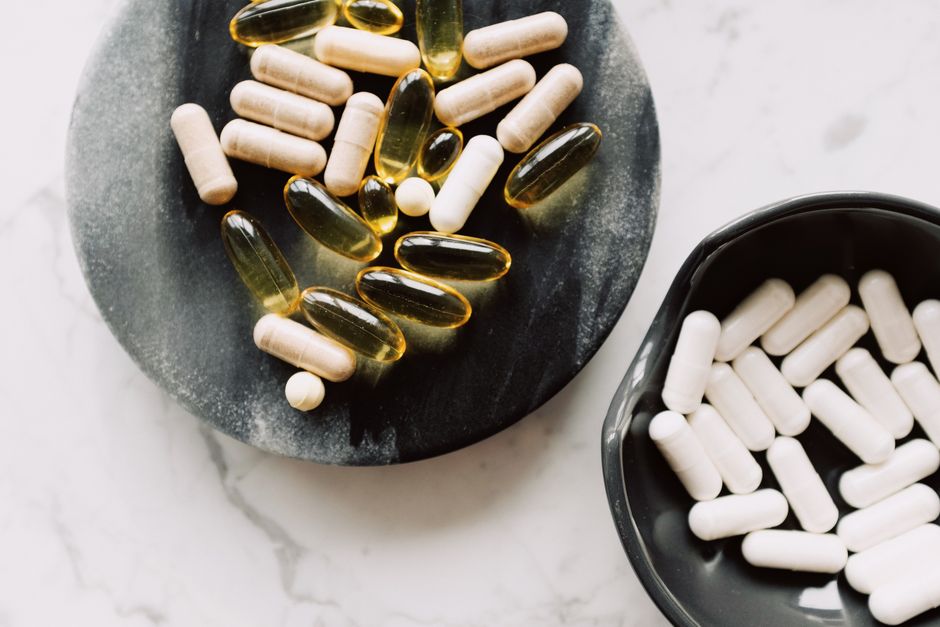
The supplement market is under-regulated. A 2026 ConsumerLab test found that one-third of collagen supplements tested contained less collagen than claimed on the label. Some contained heavy metals. Here is how to spot a bad product.
| Red Flag | Why It Matters | What to Look For Instead |
|---|---|---|
| “Collagen” without “hydrolyzed” or “peptides” on the label | Non-hydrolyzed collagen is too large to absorb. You are literally flushing it down the toilet. | “Hydrolyzed collagen” or “collagen peptides” in the ingredient list |
| Proprietary blend hiding the dose | You have no idea how much collagen you are actually getting per serving. | Exact gram amount (e.g., “5g hydrolyzed collagen per scoop”) |
| No third-party testing seal | No one verified the product contains what the label says. | USP, NSF, or ConsumerLab seal on the bottle |
| Added biotin or hyaluronic acid as the main selling point | These ingredients are often added in trace amounts to justify a higher price. The collagen dose is usually too low. | A simple collagen + vitamin C formula. Add other ingredients yourself if needed. |
Sports Research Collagen Peptides (bovine, 10g per serving, $30 for 30 servings) carries the NSF Certified for Sport seal. Vital Proteins uses third-party testing and publishes results on its website. These are not guarantees, but they are better than nothing.
The Verdict: One Supplement, One Rule, One Warning

After reviewing the clinical data and label practices, here is the compressed answer.
For most women aged 35-55 looking to improve skin elasticity, the best choice right now is a marine-sourced hydrolyzed collagen peptide powder with at least 5g per serving and added vitamin C. Neocell Super Collagen powder ($28, 6g marine collagen, 90mg vitamin C per serving) hits all the marks at a reasonable price.
One rule: take it daily for 8 weeks before judging results. If you do not see measurable improvement in skin bounce or hydration by week 10, stop. Your body is not responding to supplementation, and continued use is unlikely to change that.
One warning: collagen supplements are not a replacement for sunscreen. UV radiation degrades collagen faster than any supplement can rebuild it. A broad-spectrum SPF 30+ worn daily will do more for your skin elasticity than any powder, pill, or potion.