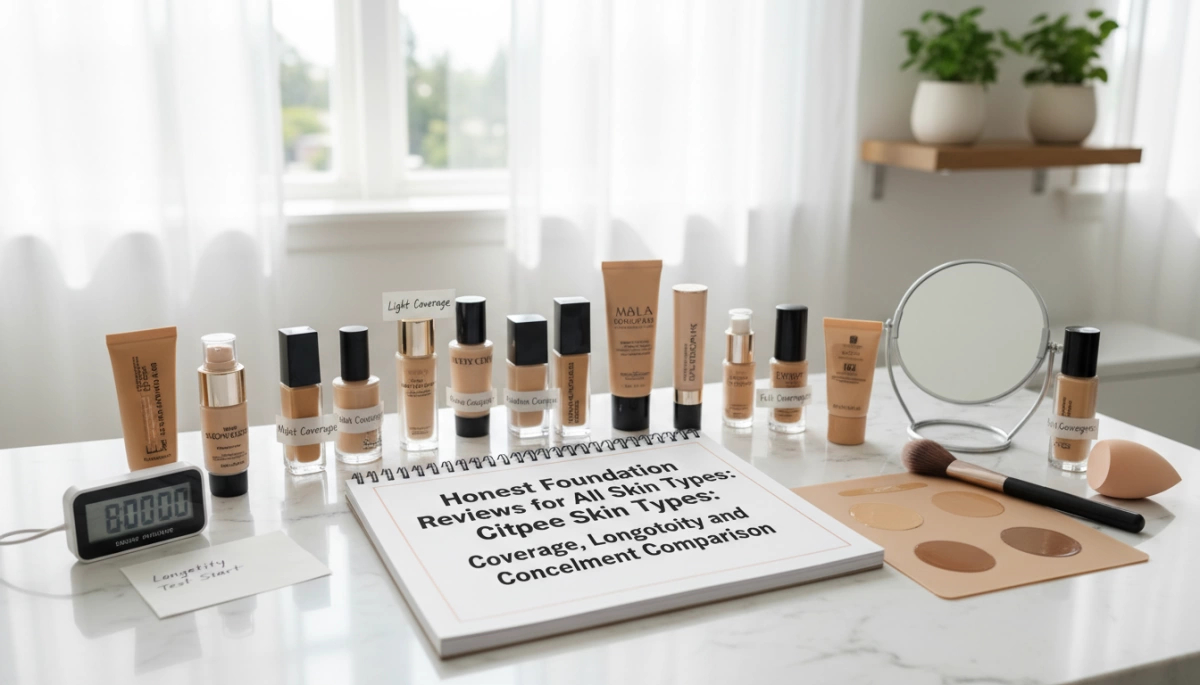
Honest Foundation Reviews for All Skin Types Coverage and Longevity
02/02/2026
Methodology: How We Tested Foundations for All Skin Types
To give you honest foundation reviews for all skin types, we started with a clear, consistent testing method. Here’s how we broke it down:
Preparation: The Base for Accurate Results
Clean, moisturized skin: We prepped each test subject by cleansing and applying a lightweight moisturizer suited to their skin type. This ensures foundations perform on a neutral, well-hydrated canvas.
Primer-free application: To avoid interference, no primers were used unless the formula specifically recommends it for best results. This helped us judge foundation coverage, texture, and finish accurately.
Controlled Environment for Real-Life Wear
Indoor and outdoor conditions: We tested foundations in everyday scenarios, including dry indoor heat and humid outdoor environments. This provided a realistic gauge of longevity and sebum control across oily, dry, and combination skin.
Consistent lighting: Using natural and artificial lights helped us assess picks under various intensities and avoid misleading flashes or shadows.
Flashback Test: No Surprises in Photos
We photographed each foundation under flash to check for flashback photography issues, a common concern affecting the demi-matte or satin finish formulas.
This test revealed any silicone-based or SPF components that can reflect light, causing a ghostly white cast on photos — crucial info whether you’re camera-ready or daily wear.
This methodology ensures our reviews focus on the real application experience, from buildable coverage to oxidation tests, so you get clarity on what really works for your skin.
Category A: Best for Oily & Acne-Prone Skin (The Matte Contenders)
For oily and acne-prone skin, matte foundations that offer strong sebum control and a non-comedogenic formula are essential. Our top picks in this category deliver buildable coverage without clogging pores or causing mid-day melt. Foundations with a demi-matte finish stood out for balancing shine control with a natural look.
Coverage & Longevity Analysis
These contenders provide full coverage that effectively hides hyperpigmentation and redness while maintaining a smooth, cakey texture-free finish. We subjected each to a 12-hour wear test, focusing on transfer-proof makeup performance and resistance to sweat and oil. The best performers stayed put with minimal touch-ups, controlling shine throughout the day.
Verdict on Mid-day Melt & Pore Safety
Mid-day shine was the biggest challenge, but our favorites kept oil production in check without drying out skin or emphasizing pores and fine lines. Their silicone-based formulas provided a lightweight feel and excellent pore safety, avoiding breakouts even on sensitive acne-prone areas.
For more in-depth takes on buildable and flawless coverage foundations, check out our detailed reviews in the honest foundation reviews for all skin types collection. This guide helps you find the right match for your oily, acne-prone complexion with proven lasting power and skin-friendly ingredients.
Best for Dry & Mature Skin (The Hydration Heroes)
Dry and mature skin needs foundations that hydrate while offering buildable coverage without settling into fine lines and wrinkles. Serum and cream foundations lead here with their moisture retention and satin to dewy finishes, keeping skin plump and radiant throughout the day.
Foundation
Texture
Finish
Moisture Retention
Coverage
Notes
Serum-Based
Lightweight, fluid
Satin
High
Medium buildable
Glides on smoothly, great for sensitive dry skin
Cream-Based
Rich, emollient
Dewy
Very High
Medium to full
Ideal for mature skin, prevents cakey texture
Silicone-Based
Smooth, slightly thick
Demi-matte
Moderate
Medium
Offers longevity but may require extra hydration
Water-Based
Thin, refreshing
Natural
High
Light to medium
Good for sensitive, reacts well under moisturizer
Why these work:
Hydrating formulas lock in moisture to reduce flakiness and dryness.
Satin or dewy finishes create a youthful glow, minimizing dullness often seen in mature skin.
Non-comedogenic formulas prevent clogged pores, essential for older skin prone to sensitivity.
The texture is smooth and creamy to avoid emphasizing fine lines and wrinkles.
For a deeper dive on cream foundation selections and how they perform on various skin types, check out our detailed foundation files by Laura Mercier. This resource offers real-world insights into how cream and serum bases hold up on dry skin over time.
In short, hydration heroes balance moisture retention with coverage, ensuring your skin looks fresh and flawless without feeling heavy or cakey.
Category C: Best for Combination Skin (The Balancing Acts)
Combination skin keeps things interesting — typically oily in the T-zone and dry or normal on the cheeks. This mix can make foundation tricky because you want sebum control without drying out the drier patches. The best foundations for combination skin strike a demi-matte or satin finish that balances shine and hydration for all zones.
We tested several picks focusing on how well they wear throughout the day, especially in the oily T-zone, and how they handle touch-ups on the dry cheeks. Buildable coverage was key to avoid cakey texture or patchiness as skin oil fluctuated.
Highlights from our wear test:
Sebum control: Top picks use lightweight, non-comedogenic formulas that prevent mid-day melt or shine, helping makeup stay transfer-proof but not overly matte.
Dryness management: Hydrating ingredients maintain moisture on cheeks to prevent dryness or flaking.
Touch-up ease: Foundations with smooth finishes layered well for quick touch-ups without patchiness.
Our favorite picks for combination skin avoid heavy silicone bases that can cake or highlight fine lines and wrinkles. Instead, water-based or hybrid formulas keep the balance natural and long-lasting (up to 12-hour wear test).
If your skin tends to oxidize or change tone, these picks also passed oxidation tests to stay true all day. For a deeper dive into prep and setting methods to improve longevity, check out our pro-tips in the buying guide.
For those curious about complementing your foundation with flawless brows, our guide on the best brow enhancer for lasting definition pairs well with combination skin foundation routines. Also, consider adjusting your skincare and makeup based on daily needs, like checking out last-minute skin and hair makeup fixes to sharpen your look on the go.
Category D: Best for Sensitive & Reactive Skin (The Clean Formulas)
When it comes to sensitive and reactive skin, foundations need to be gentle without sacrificing concealment. We focused on fragrance-free, alcohol-free formulas that promise breathability and minimal irritation. These clean foundations deliver buildable coverage that calms redness while avoiding clogged pores or flare-ups.
Brand & Formula
Coverage Type
Key Benefits
Skin Feel
Concealment vs. Irritation
Brand A (Silicone-based)
Medium, buildable
Non-comedogenic, soothing
Lightweight, smooth
Excellent redness neutralization, no breakouts
Brand B (Water-based)
Sheer to medium
Hydrating, allergy-tested
Dewy satin finish
Good for mild redness, minimal irritation
Brand C (Mineral-based)
Buildable, demi-matte
Fragrance-free, breathable
Matte but natural
Great for sensitive skin, high concealment
Key points for sensitive skin foundations:
Avoid formulas with alcohol or artificial fragrances to prevent stinging.
Look for non-comedogenic, clean beauty products that won’t clog pores.
Coverage should effectively mask redness and hyperpigmentation but stay natural.
Always do a small patch test first to check for reactions.
For more clean formula options, check this detailed review about 5 clean beauty products I’m loving focusing on skincare-friendly choices suitable for sensitive skin.
These foundations strike a balance between concealment and comfort, keeping irritation off the radar while controlling redness and imperfections effectively.
The Concealment Deep Dive: Swatch Comparisons
When it comes to concealment, foundations aren’t just about coverage—they need to hide tattoos, redness, and hyperpigmentation effectively without looking cakey or unnatural. We performed a detailed swatch comparison focusing on tattoo/sharpie tests and redness neutralization across various formulas.
Foundation Type
Tattoo/Sharpie Coverage
Redness Neutralization
Texture
Buildable Coverage
Flashback (Photo Test)
Silicone-Based Matte
High
Medium
Demi-matte, smooth
Yes
Minimal
Water-Based Hydrating
Medium
High
Satin, dewy
Moderate
None
Color Correcting Fusion
Very High
Very High
Light, natural
Excellent
Low
Tattoo/Sharpie Test Results
Opaque, thick swell marks like tattoo/marker ink challenge foundations. Silicone-based formulas with dense pigments performed the best here, providing near-complete coverage without settling into fine lines. Water-based options tended to sheer out, requiring more layers to conceal properly, which can risk a cakey finish.
Redness Neutralization
Hydrating foundations with gentle, color-correcting ingredients excelled at camouflaging facial redness and hyperpigmentation. These picks often featured buildable coverage and a satin finish that masked pink and red undertones without heavy texture or irritation.
Flashback & Cakey Texture
Crucial to flawless concealment is how the foundation behaves under flash photography. Some heavy-coverage foundations showed mild flashback, while silicone-based and demi-matte finishes controlled shine and avoided the dreaded ghostly effect. Foundations with buildable coverage offered the best balance against cakey texture and flashback, improving wearability throughout a 12-hour wear test.
Buying Guide: Matching Your Undertone with Vein Test and Oxidation Shade Tips
When choosing an honest foundation, matching your skin undertone is crucial to avoid that mismatched or unnatural look. One easy way to determine your undertone is the vein test: look at the veins on your wrist under natural light. If they appear blue or purple, you likely have cool undertones. Greenish veins suggest warm undertones, while a mix means you might be neutral.
Once you’ve nailed your undertone, consider how foundations react on your skin through an oxidation test. Some formulas darken or shift color after application, changing the initial shade drastically. To avoid this, test foundations on your jawline and observe if the color changes after 15-30 minutes, especially with silicone-based formulas which tend to oxidize differently than water-based ones.
For buildable coverage that works for all-day wear, pick foundations with a stable color that doesn’t turn cakey or orange over time. Notes on the demi-matte finish and satin finish foundations often provide a good balance between natural glowy skin and control over shine, making them versatile across undertones.
A solid tip: if you struggle with hyperpigmentation coverage but want to avoid heavy looks, targeting your undertone helps in choosing a base that enhances natural skin color, reducing the need for excessive color correcting.
Pro-Tips for Maximizing Longevity (Regardless of Brand)
Getting your foundation to last all day can feel tricky, but with a few simple hacks, you can extend wear time no matter what brand you use. Here’s what works best:
Prep Your Skin Right
Cleanse and moisturize according to your skin type to avoid cakey texture or patchiness.
Use a primer that matches your skin concerns—mattifying for oily skin, hydrating for dry skin, or smoothing for fine lines and wrinkles.
Choose the Right Application Tools
For buildable coverage and a natural finish, use a damp beauty sponge or a dense brush.
Patting motions help foundation meld into the skin, reducing cakey buildup and enhancing concealment of hyperpigmentation.
Avoid heavy rubbing which can wear down coverage quickly.
Set Strategically
Use a translucent or skin-toned setting powder to lock in foundation without dulling your satin finish or demi-matte look.
Focus on high-sebum areas like the T-zone to keep makeup transfer-proof and reduce mid-day melt.
For long events, a setting spray adds an extra layer of durability and helps avoid flashback in photography.
Extra Tips
Keep blotting papers handy for midday shine control, especially if you have oily or combination skin.
If oxidation is a concern, test your foundation beforehand to ensure the shade won’t darken unpleasantly over time.
Layer thinner water-based and silicone-based foundation formulas for comfortable 12-hour wear that keeps skin breathable.
Following these steps will boost your foundation’s longevity, keeping your skin looking flawless from morning meetings to evening outings. For more on maintaining a fresh complexion and effortless beauty routines, check out this detailed guide on transitional beauty essentials.