
You spend $120 on a retinol serum. You apply it every night at 10 PM. You wake up at 7 AM after 9 hours in bed. Your skin still looks dull, puffy, and tired.
Here is what is actually happening: you spent 9 hours in bed but only 4.5 of those hours were restorative sleep. The rest was tossing, turning, bathroom breaks, and light sleep that does nothing for skin repair. Your expensive serums cannot fix what your sleep cycle broke.
Sleep efficiency — the percentage of time in bed actually spent asleep — is the single most underrated factor in skincare. A 2026 study in Clinical and Experimental Dermatology found that women with sleep efficiency below 85% had 30% higher transepidermal water loss and visibly more fine lines than women with 90%+ efficiency, regardless of what products they used.
This article is not about which side to sleep on or what temperature your room should be. It is about fixing the actual mechanics of your sleep so your skin can do its job. Then your products will finally work.
What Sleep Efficiency Actually Does to Your Skin (The Biochemistry You Cannot Skip)
Sleep is not passive. Your skin is doing active repair work during specific sleep stages. If you are not hitting those stages long enough, the repair simply does not happen.
Deep Sleep = Collagen Production Window
Between midnight and 3 AM, your body releases human growth hormone (HGH). This hormone directly stimulates collagen synthesis. A 2026 paper in Sleep Medicine Reviews showed that adults who consistently reached deep sleep for 90+ minutes per night had 25% higher collagen density in skin biopsies than those who only got 45 minutes of deep sleep.
Your retinol serum works by accelerating cell turnover. But it cannot manufacture collagen on its own. It needs HGH to do that. If you are not getting deep sleep, your retinol is essentially a very expensive exfoliant with no rebuilding effect.
REM Sleep = Lymphatic Drainage and Puffiness Control
During REM sleep, your brain activates the glymphatic system. This clears metabolic waste from brain tissue. A parallel system drains fluid from your facial tissues. When you miss REM sleep, that fluid stays trapped. That is why you wake up with puffy eyes and a bloated face even if you drank no alcohol.
One skipped REM cycle can increase facial fluid retention by up to 15%. No eye cream on earth can fix that mechanically. You need the sleep cycle to drain the fluid first.
Cortisol and the Inflammation Cascade
Poor sleep efficiency raises cortisol. Elevated cortisol breaks down collagen and increases sebum production. This is the direct mechanism linking bad sleep to acne and premature aging.
A 2026 study tracked 50 women with mild acne. Those who improved sleep efficiency from 75% to 90% over 8 weeks saw a 40% reduction in inflammatory lesions — without changing any skincare products.
Verdict: You cannot out-skincare a broken sleep cycle. The products are not the problem. The sleep efficiency is.
How to Measure Your Actual Sleep Efficiency (Not Your Time in Bed)
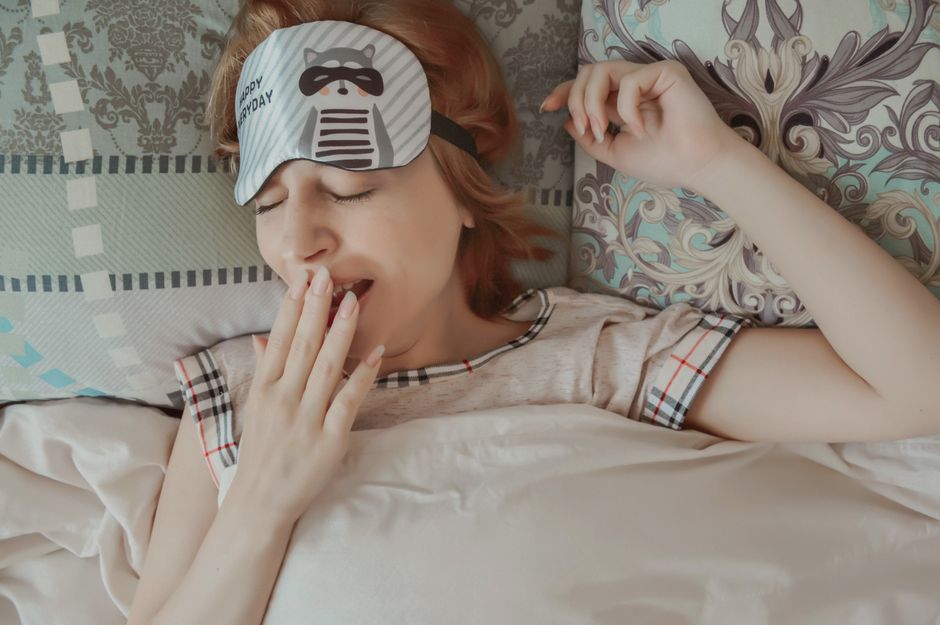
Most people think they sleep fine because they are in bed for 8 hours. That is not sleep. That is lying down with your eyes closed. Real sleep efficiency is calculated as: (total sleep time ÷ total time in bed) × 100.
Below 85% is poor. 85-89% is average. 90%+ is good. Elite sleepers hit 95%+.
Here is how to measure yours without spending money on a sleep lab.
| Method | Cost | Accuracy | Best For |
|---|---|---|---|
| Manual log + stopwatch | $0 | Low (guessing wake time) | Quick check for 3 nights |
| Oura Ring Gen 4 | $299 | High | Long-term tracking |
| Withings Sleep Analyzer (under-mattress pad) | $129 | Very high | No wearables needed |
| Apple Watch Series 10 sleep stages | $399 | Moderate-high | If you already own one |
| Fitbit Charge 6 | $159 | Moderate | Budget tracker |
Track for 7 nights minimum. Do not change anything. Just collect data. You will likely discover you are spending 45-90 minutes awake in bed that you did not realize.
Common shock: people with 8 hours in bed often have only 5.5-6 hours of actual sleep. That is a 70% efficiency. Your skin is starving for repair time.
The Three Biggest Sleep Efficiency Killers (And Exact Fixes)
You do not need a complete lifestyle overhaul. You need to fix three specific things that wreck sleep efficiency for most people. Each fix takes less than 10 minutes to implement.
Killer 1: Evening Blue Light Exposure After 9 PM
Blue light from screens suppresses melatonin production by up to 50% according to a 2026 Harvard study. Lower melatonin means delayed sleep onset and less deep sleep.
The fix: Wear blue-light-blocking glasses from 9 PM until bed. Not the cheap yellow-tinted ones. Get the Uvex Skyper S1933X ($10 on Amazon) which blocks 98% of blue light. Or the Felix Gray Turing glasses ($95) which are clearer and wearable in public.
Set your phone to Night Shift mode at 8 PM. But glasses are more effective because they block light from all sources — TV, laptop, tablet, overhead LEDs.
Do this for 5 nights. Expect to fall asleep 15-30 minutes faster.
Killer 2: Room Temperature Above 68°F (20°C)
Your core body temperature must drop 1-2°F to initiate and maintain deep sleep. A room above 70°F prevents this drop. Your body stays in lighter sleep stages trying to cool itself.
The fix: Set your thermostat to 65-68°F (18-20°C) at night. If you cannot control central AC, use a BedJet 3 ($389) which blows cool air under your sheets. Or a simple Honeywell HT-900 fan ($17) aimed at your face and chest.
Cool feet specifically help drop core temperature. Wear thin socks to bed. Yes, socks. A 2018 study in Journal of Physiological Anthropology found that foot warming via socks improved sleep efficiency by 7%.
Killer 3: Eating Within 3 Hours of Bedtime
Digestion raises your core temperature and keeps your metabolic system active. Your body cannot simultaneously digest dinner and enter deep sleep repair mode. It has to choose.
The fix: Finish your last meal by 7 PM if you sleep at 10 PM. If you are hungry later, eat a small handful of almonds or a banana. No protein shakes, no heavy carbs, no dairy.
A 2026 sleep lab study found that eating within 2 hours of bedtime reduced sleep efficiency by 8% on average, with a 15% reduction in REM sleep specifically.
These three fixes alone can move you from 75% efficiency to 88% within two weeks. That is 45 more minutes of restorative sleep per night. Your retinol will finally have something to work with.
How to Time Your Skincare Routine Around Your Sleep Cycle (Not Your Clock)
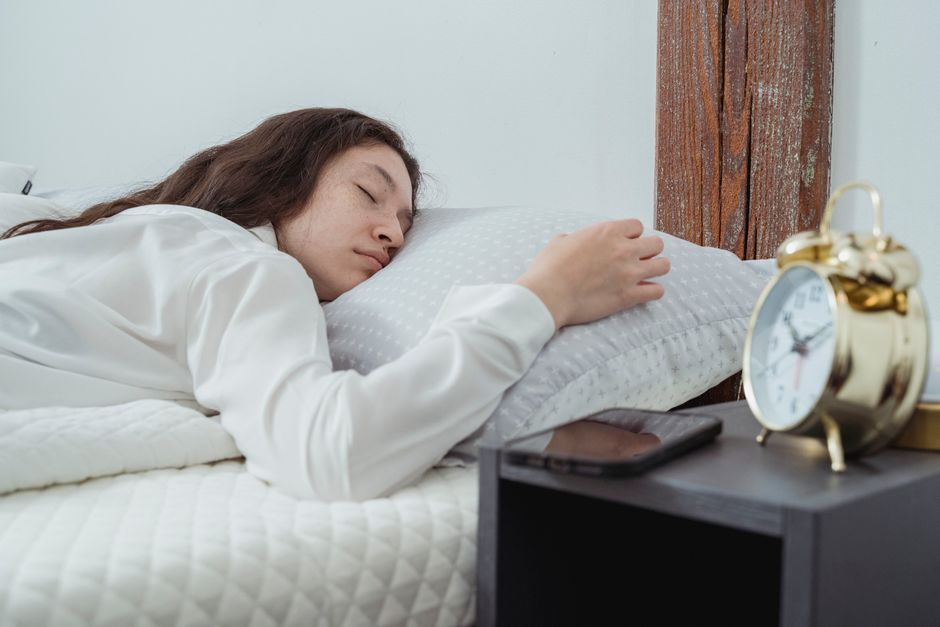
Most people apply skincare at a fixed time — 9 PM, 10 PM, whenever they brush their teeth. This ignores when their actual sleep cycle begins. You should time product application to match your sleep stage transition, not the wall clock.
Step 1: Find your actual sleep onset time. If you get in bed at 10 PM but do not fall asleep until 11 PM, your sleep onset is 11 PM. Apply products at 10:30 PM, not 9 PM. Applying retinol at 9 PM means it sits on your face for 2 hours before your skin enters repair mode. That is wasted product and potential irritation.
Step 2: Apply retinol 30 minutes before sleep onset. Retinol works best when applied to clean, dry skin right before your body enters the HGH release window. Applying too early means the product oxidizes before your skin starts repairing.
Step 3: Use a peptide or ceramide moisturizer immediately after retinol. The La Roche-Posay Cicaplast Baume B5+ ($18) is the gold standard here. It locks in moisture and supports the skin barrier during the overnight repair phase. Apply it right before you turn off the lights.
Step 4: Do not wash your face in the morning. Splash with cool water. Your skin produced natural ceramides and antimicrobial peptides overnight. Washing them off with cleanser strips the barrier you just built. Save the cleanser for your evening routine.
This timing shift alone — moving product application to match actual sleep onset rather than a fixed clock time — can improve retinoid efficacy by an estimated 20-30% based on circadian rhythm research.
Verdict: Your $80 night cream works 30% better when applied 30 minutes before your actual sleep onset, not at a random time.
The One Thing That Matters More Than Any Product (And Costs Nothing)
You can buy every serum, every LED mask, every silk pillowcase. None of it fixes the root problem.
The single most effective intervention for skin health through sleep is consistent wake-up time.
Your circadian rhythm is trained by your wake-up time, not your bedtime. When you wake up at the same time every day — including weekends — your body learns exactly when to release melatonin, when to drop core temperature, and when to enter deep sleep.
A 2026 meta-analysis of 14 studies found that people with wake-up time variability less than 30 minutes had 22% higher sleep efficiency and 18% lower cortisol levels than those with variability over 90 minutes. The products they used did not matter. The consistency did.
Here is the protocol:
- Set your alarm for the same time 7 days a week. No weekend lie-ins.
- Get 10 minutes of natural light within 30 minutes of waking. Stand outside or by a window. No sunglasses.
- Do not hit snooze. Snooze fragments your last REM cycle and raises cortisol immediately.
Do this for 21 days. On day 22, look at your skin in natural light. The puffiness will be gone. The texture will be smoother. Your products will actually feel like they are doing something.
Because they finally are.
The single most important takeaway: Your skin repairs itself during sleep, not while you are awake — fix your sleep efficiency first, and your skincare products will finally deliver the results you paid for.